The Federal Reserve is meeting in Washington this week, when it will consider whether to raise interest rates in an effort to tamp down on inflation.
The meetings come at a moment when rising prices are shaping large parts of the U.S. economy and inflation is set to play a key role in next Tuesday’s midterm elections.
Yet members of the bank’s interest rate-setting committee are widely expected to keep benchmark rates steady this month.
There are several reasons the Fed is unlikely to move on rates Wednesday. Most of them come down to a sense among top officials that the central bank shouldn’t rush into interest rate decisions — and that it definitely shouldn’t do so less than a week out from Election Day.
“Inflation remains above our goal,” Michelle Bowman, the Fed’s vice chair for supervision, said Oct. 14. “We have some time to wait and see how financial conditions evolve before we take more action.”
The Fed last raised rates by a quarter of a percentage point in September after a string of monthly inflation readings well above its target of 2% and no signs that prices were coming down anytime soon.
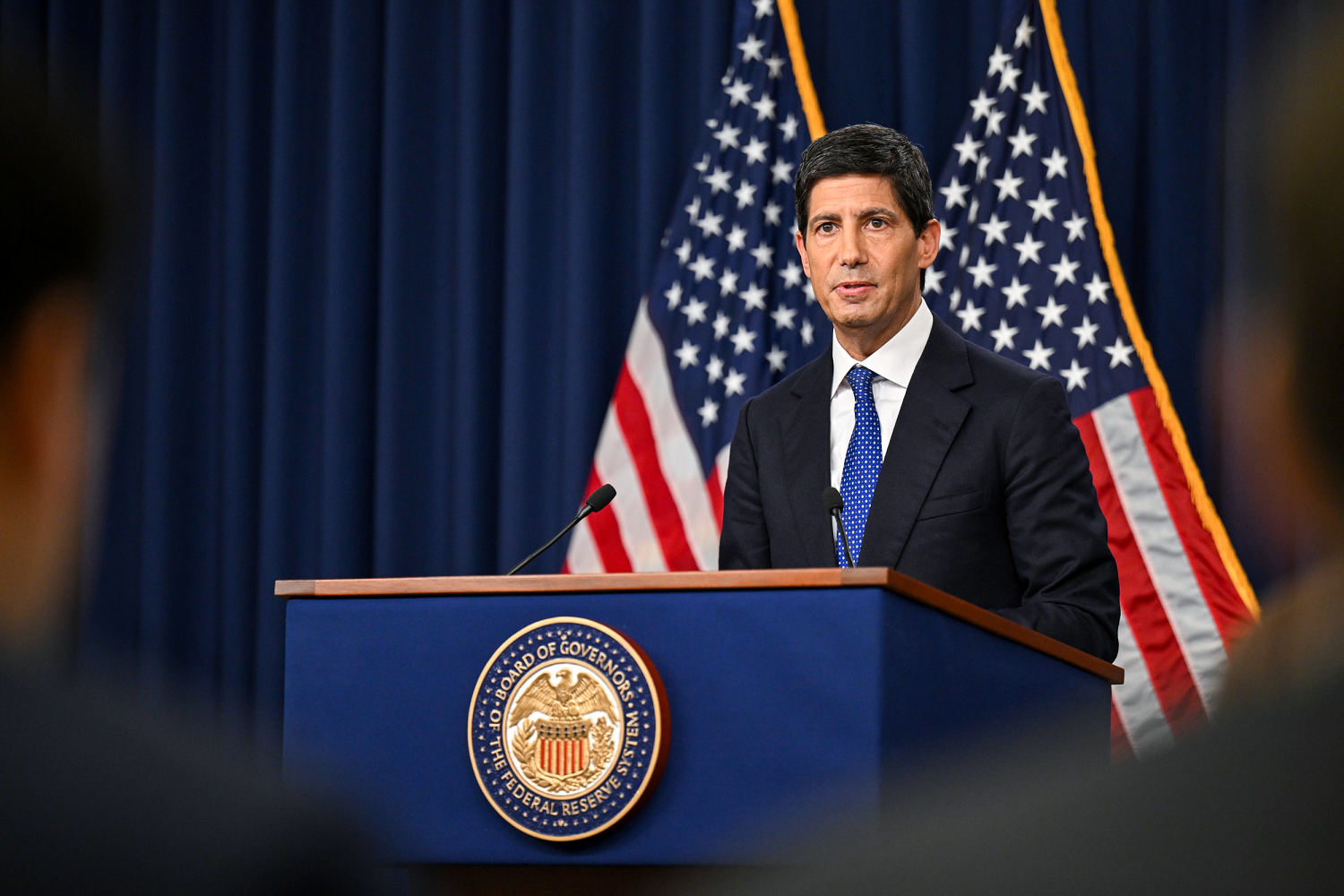
“The plain fact is that inflation is too high and has been for too long,” Federal Reserve Chair Kevin Warsh said at the time.
Inflation figures for September, released this month, underscored Warsh’s point, with the annual inflation rate rising to 3.7% from 3.4% the previous month.
Some analysts believe Warsh and the Fed will be taking a risk if they vote to hold rates steady, given the trajectory of inflation.
“The case for skipping [a rate hike in] October is not terribly compelling,” analysts at Deutsche Bank wrote.
Fed officials, however, point to a core tenet of the dual mandate that Congress has assigned to the Fed, of promoting maximum employment while maintaining stable prices.
Specifically the “stable” part, which underpins the Fed’s famously slow and deliberative approach.
“I don’t feel urgent that we have to decide with a limited set of information,” San Francisco Fed President Mary Daly said in a recent interview. “I think we have the time that we need.”
Another guiding principle at the Fed that is most likely tipping expectations about Wednesday is its tradition of staying far away from politics.
If the Fed were to raise rates just days before the midterms, it could, at best, risk looking like a politically motivated decision. At worst, it could influence people’s votes.
“We could imagine that all else equal the Fed might prefer to stay out of the headlines for raising rates just ahead of a midterm election where affordability is the principal concern,” the Deutsche Bank analysts wrote.
Voters have repeatedly told pollsters that rising prices, especially in the housing and energy sectors, are their primary concerns as they cast their ballots.
With control of both the House and the Senate on the line in Tuesday’s election, voters are clear about whom they blame for the higher prices: President Donald Trump’s war in Iran and his global tariff regime.
The most recent NBC News poll found Trump’s approval rating at 27% for his handling of the cost of living and just 29% for his handling of the war with Iran.
Two-thirds of Americans said the soaring gas prices triggered by Trump’s Iran war were either a “very serious” or a “somewhat serious” problem.
Likewise, more than half of respondents said current economic conditions had caused them to change what kinds of groceries they buy.
All that adds up to a very difficult political environment for Trump’s fellow Republicans, who are struggling to balance their general support for him with how unpopular his policies have become with voters.
Even the Trump administration, which normally maintains an upbeat view about the economy and inflation, sounded concerned after the most recent inflation reading earlier in the month.
“This was a disappointing number,” said Kevin Hassett, director of the White House National Economic Council.
Asked by Fox Business hosts why voters had such negative views of the current economy despite higher spending, Hassett was unsure. “It’s a puzzle that we’re noodling about every day,” he said.