People spray sparkling wine as they celebrate early exit poll results for Israel’s general election in Tel Aviv, Israel, Tuesday, Oct. 27, 2026.
Oded Balilty/AP
hide caption
toggle caption
i
Oded Balilty/AP
TEL AVIV, Israel — With a majority of the votes counted on Wednesday morning, there was still no clear winner in Israel’s pivotal parliamentary election, but Prime Minister Benjamin Netanyahu was leading his main opposition rival, Gadi Eisenkot in the official tally.
However, the various opposition groups as a whole, including a significant showing by two Arab-led factions, had more votes overall than Netanyahu’s right-wing bloc of parties — indicating Israelis had turned out in their numbers to express their dissatisfaction with his government.

Overnight Tuesday both leaders addressed supporters and hailed their early results, somewhat prematurely, each suggesting they had triumphed.
“We made history! The public has voted for change,” said Eisenkot, a center-right former military chief of staff who has promised more diplomacy and less extremism.
Netanyahu told supporters, “The right-wing bloc has a clear, decisive majority among the Zionist public.”
But such a tight race means there could now be weeks of political gridlock.
The winning party needs a coalition of 61 lawmakers in the 120-seat Israeli parliament, or Knesset, in order to form a government. The final results will depend on the math and negotiations among broader alliances.
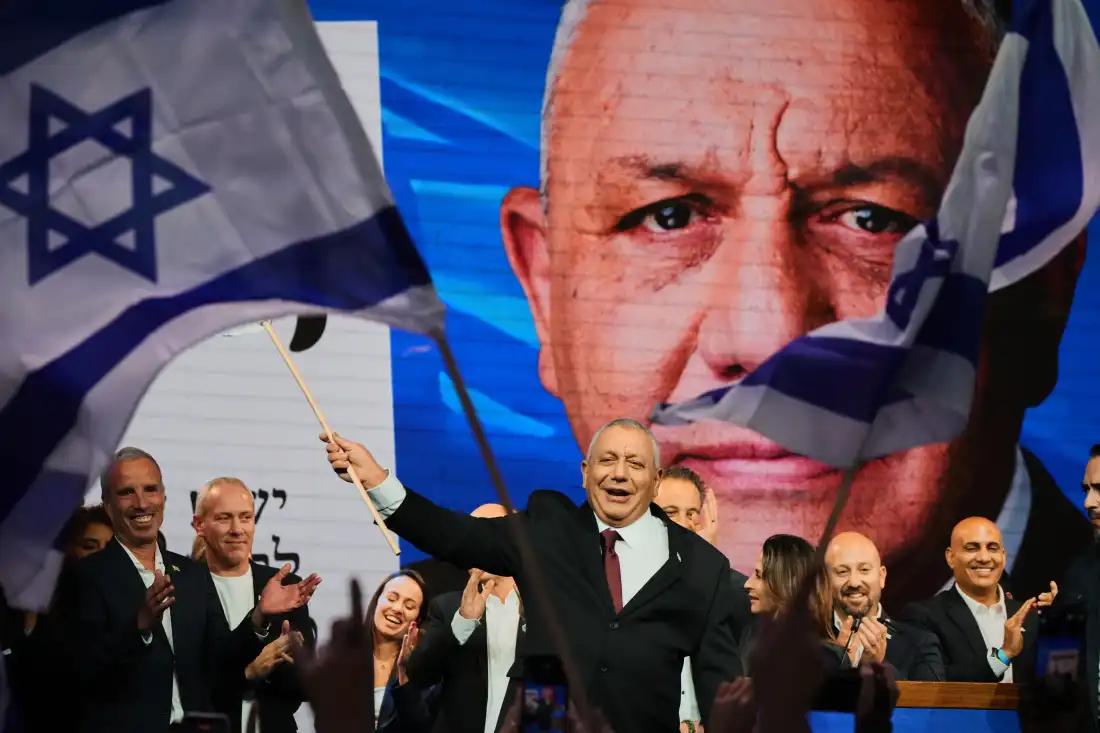
Gadi Eisenkot, leader of the Yashar (“Straight”) party, waves an Israeli flag onstage following the release of the first exit poll results in Israel’s general election in Tel Aviv, Israel, Wednesday, Oct. 28, 2026.
Ariel Schalit/AP
hide caption
toggle caption
i
Ariel Schalit/AP
Arab voters make up about 20% of Israel’s population, and two Arab-led parties — the socially conservative United Arab List, or Raam, and the left-wing Joint List — could be kingmakers, except that both Netanyahu and Eisenkot and his allies have resisted partnering with them.
According to election officials, Israeli voter turnout on Tuesday was at more than 77%, the highest in more than two decades. Tens of thousands of expatriates flew in from abroad to cast their ballots in the first election since the Oct. 7, 2023, Hamas-led attack and the war in Gaza.
Netanyahu is Israel’s longest-serving prime minister, with almost two decades in office across multiple tenures, but Israelis are divided over his leadership.
The issues at stake
Many question Netanyahu’s ability to keep them safe after the Hamas attack, the deadliest day for Jews since the Holocaust. Nearly 1,200 people were killed when Hamas attacked army bases, residential communities and an outdoor music rave — and 251 people were taken hostage back to Gaza.
Israelis have been reeling from reports that the government had received repeated warnings from countries in the region that Hamas was planning a major assault on Israel.
What happened in return was an Israeli military onslaught that has killed more than 74,000 Palestinians, according to Gaza’s Health Ministry, and left most of Gaza destroyed. Today, Israel is fighting back against charges of genocide while Netanyahu faces an international arrest warrant for alleged war crimes.
Israel’s wars in Gaza and the region, and its policies in the occupied West Bank, have badly strained its relations with many international governments. Public support for Israel in the United States has plummeted, worrying many Israeli voters.
Still, many other Israelis are fed up with the world’s rebuke over the Gaza war and more than 67 percent of Israelis in a July 2025 poll said they were not very troubled about the suffering of people in Gaza. Netanyahu’s supporters have said the wars he has led across the region, from Gaza to Lebanon to Iran, have restored Israel’s security.
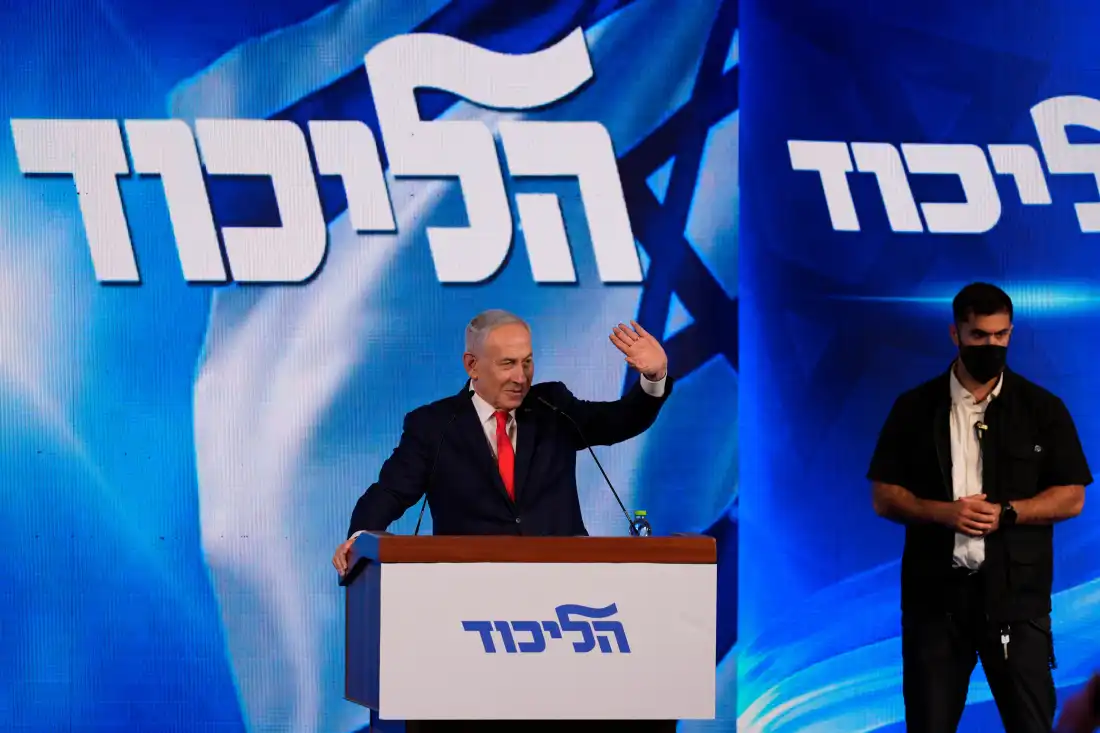
Israeli Prime Minister Benjamin Netanyahu waves to supporters at Likud party headquarters in Jerusalem following the release of the first exit poll results in Israel’s general election, Wednesday, Oct. 28, 2026.
David Goldman/AP
hide caption
toggle caption
i
David Goldman/AP
At Netanyahu’s election night party on Tuesday in Jerusalem, giant screens played Hollywood-style videos of soldiers marching, airstrikes blowing up buildings and other destruction. Some clips appeared to show massive explosions of villages in Lebanon, where Israeli destruction of civilian infrastructure has drawn condemnation from human rights groups as potential war crimes, which Netanyahu’s government denies.
The videos also repeatedly showed President Trump shaking hands with and endorsing Netanyahu. The two leaders have discussed plans to potentially launch major attacks against Iran, which could take place after U.S. midterm elections. Trump urged Israeli voters to reelect Netanyahu to “finish the job that we started.”
Supporters of his Likud party at the event struck a defiant tone. When asked if Israel went too far in the war in Gaza, 24-year-old Ori Hazan replied: “We will keep fighting them, and this is now the ideology, this is the policy. You fight us, we will kill you, OK? That’s it.”
What comes next
With the race so close, election officials told NPR they expect to finish counting votes — including hundreds of thousands of ballots from Israeli soldiers — by Thursday afternoon.
Then whichever candidate comes out on top will get the first chance to try to form a governing coalition. The party will have six weeks to do that. Both blocs are expected to engage in major horse-trading to try to form a government. This has always been the case as no party in Israel’s parliamentary system has ever won outright.
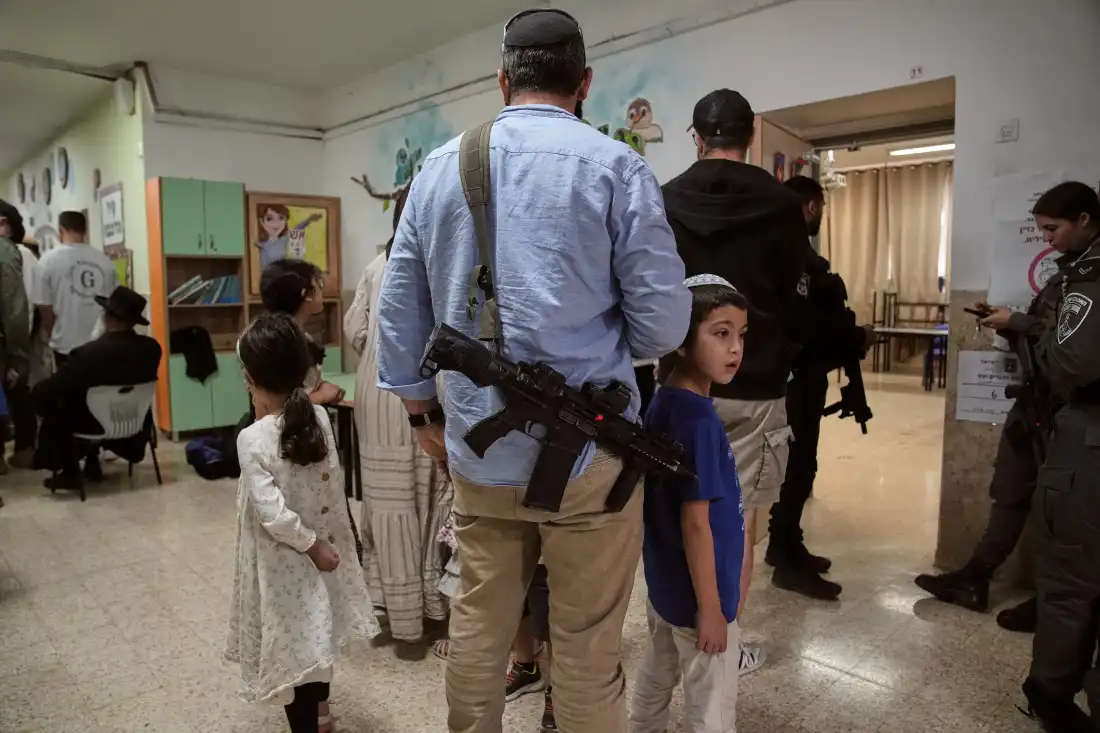
Israeli settlers line up to vote at a school serving as a polling station during Israel’s general election in the settlement of Kiryat Arba, in the occupied West Bank, Tuesday, Oct. 27, 2026.
Leo Correa/AP
hide caption
toggle caption
i
Leo Correa/AP
Eisenkot’s Yashar party includes figures from Israel’s political center and moderate right. The opposition parties he would partner with range from the right and center to the liberal left. He has pledged not to join a government led by Netanyahu.
Yair Golan, leader of the Democrats party, which is part of Eisenkot’s bloc, called on X for the bloc to form a coalition with the Arab parties.
“We have no future here if we don’t stop being afraid. And if we don’t stop with the racism,” he said. Even though it would help the Eisenkot bloc win, since the 2023 attack on Israel there’s been heightened mistrust of Arab political leaders.
Another possible scenario is if neither side is able to form a government, leaving Netanyahu as a caretaker prime minister, with a repeat election held next year.
Additional reporting by Kate Bartlett.