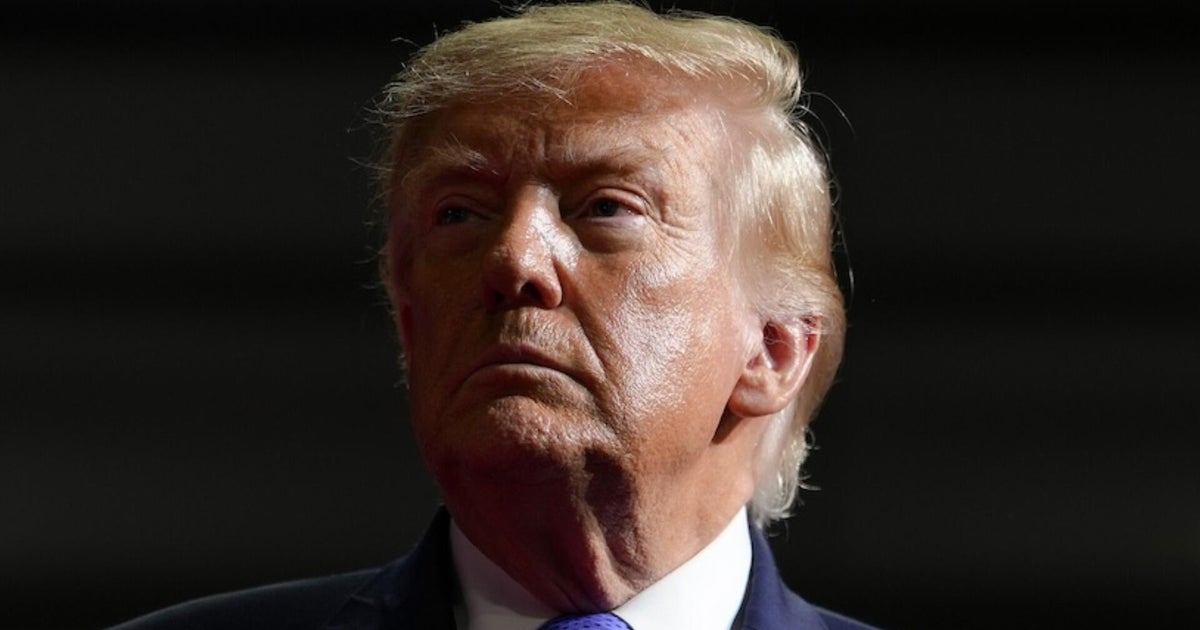
This, to be clear, is a shortened version of the President’s lecture, which omits both a long explanation of how he came to decide to take the cognitive test in the first place and a discussion of his late uncle, the physicist John Trump, who was blessed with “athletic genetics” as well as “smart genetics” and “just got named the No. 1 professor in the history of M.I.T.”
By this point in the rally, Trump had been speaking for nearly an hour, without making any effort to address the issue that is driving this election—voter discontent across the political spectrum with the high prices that he promised to bring down on Day One of his Presidency but which continue to rise owing to the war that he promised not to start. When he did mention the economy, it was all golden-age-this and I’m-so-great-that. “We are making a fortune in this country,” Trump insisted, saying it with such conviction it sounded as though he was thinking of his own ballooning bank account. On a less upbeat note, he warned that if Democrats come back to power, America will be looking at a dim future of “open borders,” “transgender for everybody,” and a “1929-style economic depression.”
Obama, as a campaigner and as a President, always excelled as a teller of hard truths. Trump, in this as in so much else, remains his inverse. If reality is a problem, he’ll just create an alternative. “Now you have the hottest country anywhere in the world,” he told the cheering crowd in Ohio. The pitchman will never stop pitching.
Two Presidents, two Americas. For ten endless years, our politics has been all about the vast gap that separates these two men, and the near-impossible task of trying to understand how a country that elected Obama twice could, so soon after, do the same for Trump. Watching them both on Wednesday night, toggling between screens and alternate universes as they shot barbs at each other, was a reminder of how very long we’ve been stuck in this loop.
What’s different this time is a sense—and, until there are votes counted and races called, it’s just a sense—that real-world events have intervened to make this less of an intractably divided country and more of a place where at least some shared truths are still possible. Perhaps the biggest and most motivating truth is that prices are too damn high, which comes with the corollary that Trump has no one to blame for this but himself. Headed into the midterms, America is not a fifty-fifty nation on these questions; it is a country where sixty per cent or more of the people disapprove of the President and do not support his policies.
David Plouffe, the strategist who helped Obama win election to the White House in 2008, observed the other day that, when a big wave is building in American politics, it’s almost impossible for individual politicians to swim against it. “Voters just shut you out, and that’s what’s happening right now,” he said during an interview at The New Yorker Festival. “When you’re in a landslide scenario against you, your political money and political ads have no capability to compete with reality.”
He and other political handicappers believe that is what is happening to Trump and his Republicans right now. The idea has taken hold so firmly in Washington that much of the talk here is about the Democratic infighting that’s already broken out about how to run the Congress that everyone now assumes the Party will soon win. In the prediction markets, there’s currently a sixty-eight-per-cent chance of Democrats winning the Senate and a ninety-two-per-cent chance of Democrats winning the House.