For nine months, on Nicollet Avenue in Minneapolis, there has been a makeshift memorial for Alex Pretti, the registered nurse who was shot and killed by federal agents while trying to shield a fellow-protester during last winter’s deportation campaign in the city. On Tuesday, after Minnesotans cast their ballots in the state’s Senate race, many of them pressed their “I voted” stickers onto a lamppost at the memorial, as if completing a picture. The gestures suggested something about this year’s midterm elections that, as the evening wore on, turned out to be true: that it was a mundane event that held unusual moral stakes.
During the two years since Donald Trump won reëlection, he has pushed the country toward a brink. Trump won only a narrow Presidential majority in 2024, and his party held a majority in each chamber of Congress by just a few seats. Even so, the President faced little institutional resistance as he pushed the federal government-eroding DOGE program, the senseless and costly tariffs, the authoritarian power of the crackdown on migrants, the feckless Iran war. He could pursue these goals because he had convinced most of his party, and many members of the public, that his victory over Kamala Harris meant that half of the country would irrevocably be on his side.
The results of the midterm votes are still rolling in. But the rejection of the President is undeniable and uncomplicated, and it reached deep into what had long been understood as conservative territory. His party has lost its Senate race in Ohio—and looks likely to lose in Michigan—where the post-industrial economy had long supplied the symbolic heart of Trumpism. It has lost in Texas, where Democrats had not won a statewide race in more than a hundred contests, stretching back to 1994, and in South Carolina. It has lost in Iowa and in Kansas, which has not seated a Democratic senator since the Great Depression. There are counties in southwestern Kansas where Trump won two years ago by about thirty-five points—Finney County, Seward County, Ford County—that, as the tallies accumulated in the state’s U.S. Senate race, were voting narrowly for the Democrat. For a decade, the country had become used to a fixed map—blue in the cities, deep red in the outlying areas. Now there is some instability around the edges.
One specific issue, or an especially weak Republican candidate, might make sense as an explanation in particular races. But the truth is that Trump’s past two years have offered voters a menu of reasons to turn away from him. In South Texas, it might have been the cruelty of the immigration raids; in Kansas, the effect of the Iran war on diesel and fertilizer prices; in South Carolina, an especially poorly chosen Republican candidate. Over the course of the long Trump decade, many liberals had come to assume that conservatives were so devoted to the culture war that they were politically impervious to events. But this time, in such places, the news made it through. All of it mattered.
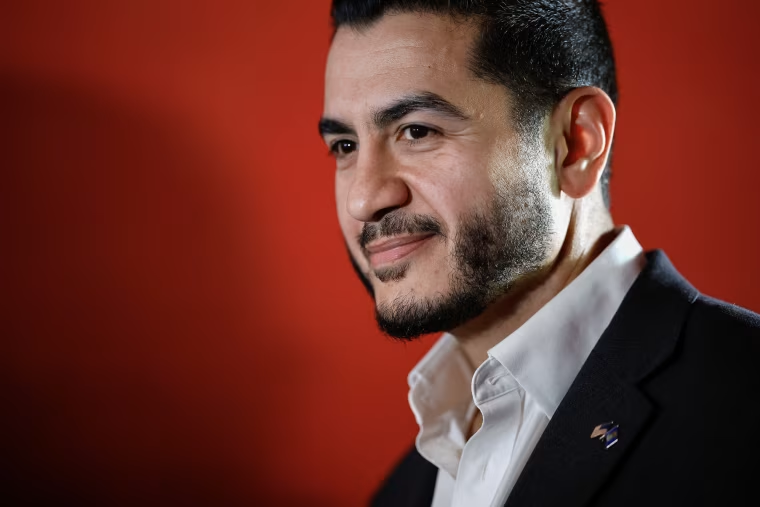
Somewhat suddenly, almost nothing in U.S. politics seems certain. The Democratic Party has lately been understood as an aging, defensive entity, with a nursing-home veneer. But this year’s campaigns have elevated a group of younger and newer Democrats (Jon Ossoff, in Georgia; James Talarico, in Texas; Abdul El-Sayed, in Michigan) who have found it quite natural to denounce the oligarchic and authoritarian elements of the status quo, and to separate themselves from some elements of the Party’s doctrine. The South, the most deeply conservative region in the country for nearly all of its history, suddenly has a purple hue. Is J. D. Vance still the presumptive next Presidential nominee? Will the Republican Party still pliably fall into line behind the man who lost it Texas?