Good morning. You’re reading the Up First newsletter. Subscribe here to get it delivered to your inbox, and listen to the Up First podcast for all the news you need to start your day.
Today’s top stories
Democrats have gained full control of Congress for the first time since 2023, flipping both the House and Senate with significant wins in deep red states. Abdul El-Sayed defeated Mike Rogers in Michigan, and Troy Jackson defeated Susan Collins in Maine, winning their states’ closely watched Senate seats. In Texas, Democrat Gina Hinojosa defeated Republican Gov. Greg Abbott, ending more than 30 years of Republican control, while Democratic state Rep. James Talarico won the U.S. Senate race. In Kansas, Adam Hamilton became the first Democratic senator elected in nearly a century. A record number of candidates endorsed by the Democratic Socialists of America were elected to the House, growing the organization’s presence on Capitol Hill. Nine states also made history with their gubernatorial picks. Take a look at how key demographics voted.
Here are 6 midterm takeaways from NPR’s senior political correspondent Domenico Montanaro:
The U.S. Capitol is seen behind a light pole, on Capitol Hill on June 3, 2026.
Cliff Owen/AP
hide caption
toggle caption
i
Cliff Owen/AP
All the signs were pointing in Democrats’ direction heading into election night. But nothing indicated quite this level of a romp.
- President Trump wanted this election to be about him. It was and that hurt Republicans: Trump was historically unpopular. People were frustrated with the economy and the war, and it hurt the GOP. It turns out when you wage the kind of war that you said you wouldn’t get into — that drags on, raises gas prices and piles on people who were already feeling the pinch, don’t be surprised when you pay the price.
- Republicans tried to insulate themselves with redistricting, but it didn’t work: Trump strongly encouraged conservative-led states to redistrict — but it backfired. There was always the possibility that weakening safe districts could make them more competitive and that happened. It’s a true cautionary tale of the “dummymander.”
- Latinos are a true swing group in America now: Trump only lost Latinos by 5 points in 2024. In this election, they sided with Democrats by 27 points. The economy and deportation tactics were big reasons why. In a real indictment of the Trump deportation policies, the voter poll found 59% overall said they disapproved of ICE.
- Is Texas — and other red states — in play for Democrats or was this election a giant asterisk? Democrats won in a lot of red states. The party has needed to show it can win in red and rural areas. They did that this time. But will that last, or is it a Trump-sized asterisk?
- The results of this year’s elections don’t mean the country is enamored with the Democratic Party: The party is still unpopular and fissures within their coalition will be laid bare over the next several months in the 2028 presidential primaries. They’ll have to be careful politically with how they approach leadership with the opportunity they’ve been handed.
- The polls got the direction right. If anything, they underestimated Democratic support: For a decade, polls have underestimated Republican support. In these elections, that was not the case. It’s important to understand that it’s hard to poll when the country has been going through as significant a political realignment as it has been in the Trump era.
President Trump lashed out early on as results showed Democrats ahead in many key races, but later congratulated the Democrats and said more than once that he would respect the outcome of the elections.
- 🎧 The president positioned himself as the central figure in the midterm elections, relying on his personality and appeal to supporters to counter low approval ratings and economic concerns. NPR’s Franco Ordoñez tells Up First that this strategy made it more difficult for vulnerable candidates to distance themselves from him. Ordoñez says he expects there to be a confrontational relationship between Trump and the Democrats, especially as they prepare to investigate him and his family.
After the Democratic victory in the House, Rep. Hakeem Jeffries is poised to become the first Black lawmaker to be elected Speaker. Last night said, “We understand as House Democrats that we need to deliver dramatic change.” With a Democratic majority, they’ll have the chance to exert more influence in the legislative branch.
- 🎧 The large Democratic margins in the House and Senate will serve as a check on the White House, NPR’s Barbara Sprunt says. A Democratic Senate majority will provide massive roadblocks for the president’s confirmation of the future cabinet and judicial nominees. In the House, Sprunt says to expect numerous investigations. Jeffries plans to hold those involved in corruption accountable, and the House will have subpoena power to compel witnesses to testify. Democrats have a list of targets in mind already, but Sprunt says the party is cautious about pursuing a third impeachment of Trump, because it doesn’t support their argument that they have more to offer than just being anti-Trump party.
Life advice
Annelise Capossela for NPR
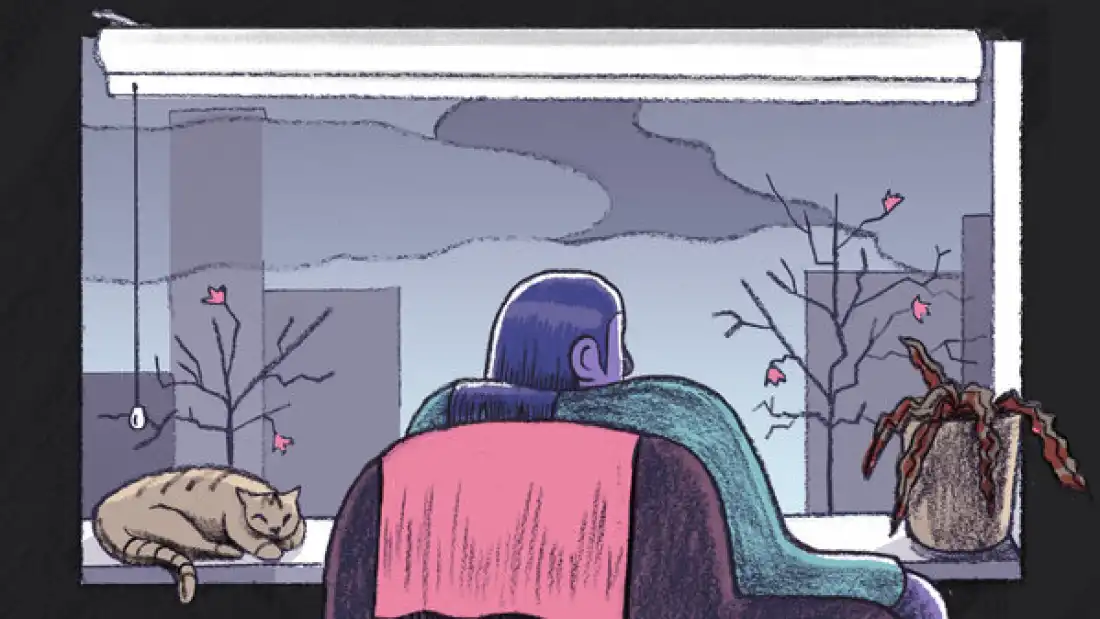
About 1 in 20 Americans experience seasonal affective disorder (SAD), and it typically lasts for nearly 40% of the year. If you’re dealing with SAD, you might feel sluggish, depressed and lose interest in activities you once enjoyed. You might also find yourself oversleeping, overeating and gaining weight. As winter approaches, NPR’s Life Kit offers advice on recognizing these feelings and finding ways to boost your mood and energy.
- 💙 Women are more vulnerable to SAD, and the condition is more common in the Northern Hemisphere.
- 💙 Some people need more light. Experts often recommend SAD lamps, which are significantly brighter than typical indoor lighting.
- 💙 Stop eating three hours before bedtime to help your body rest. Eating within a consistent 10- to 12-hour window signals your body about the time of day, no matter what else is happening.
- 💙 Exercising during the day helps your body recognize its daily rhythm, keeping you alert when needed and allowing for rest in the evening.
- 💙 Try to reduce stress by decorating a room with bright colors, seeing a therapist to discuss your feelings, or trying meditation for relaxation.
For more guidance on how to get through SAD, listen to this episode of NPR’s Life Kit. Subscribe to the Life Kit newsletter for expert advice on love, money, relationships and more.
Picture show
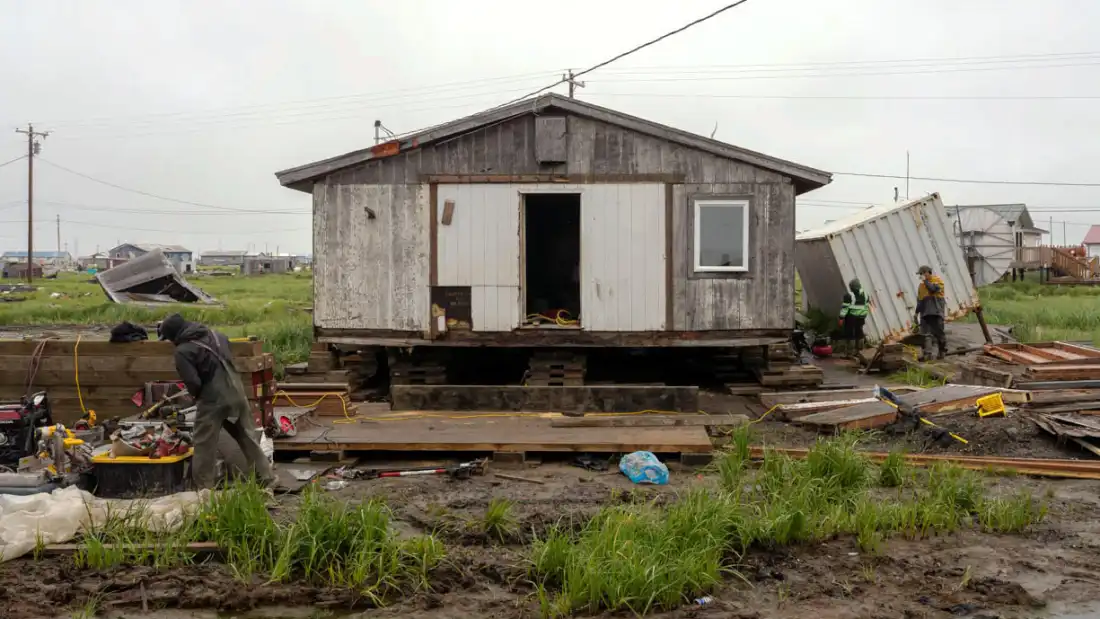
Construction crews work on houses and other building throughout Kipnuk after ex-typhoon Halong hit Alaska’s coast in October of 2025.
Gabby Hiestand Salgado/KYUK
hide caption
toggle caption
i
Gabby Hiestand Salgado/KYUK
Typhoon Halong severely impacted small Native villages in Western Alaska last fall, destroying infrastructure and displacing more than a thousand people. A year later, many remain displaced. In Kipnuk — a village of under 200 homes — dozens of houses were swept off their foundations. The community is now mostly scattered across Alaska, and some have relocated far from their ancestral lands. Climate change increases the vulnerability of towns like Kipnuk to future storms. While most residents wish to rebuild the village in a safer location, current FEMA funding only allows for restoring what was damaged. See these photos of the town now, as its people continue to pick up the pieces.
3 things to know before you go

A jumping spider (Salticidae), also known as a flycatcher, is seen in its natural habitat in the Casupo Municipal Park in the city of Valencia, Carabobo State, Venezuela, on July 27, 2023.
Yuri Cortez/AFP via Getty Images
hide caption
toggle caption
i
Yuri Cortez/AFP via Getty Images
- A new study in the Proceedings of the National Academy of Sciences shows that jumping spiders meet all sleep criteria and show signs of entering a rapid eye movement (REM) sleep cycle.
- Ancient Egyptian mummies were once marketed as medicine. Archaeologists are using chemistry to better understand how they were made.
- New World screwworm cases have increased to 99 since June, as the outbreak accelerates across Texas, New Mexico and Arizona.
This newsletter was edited by Suzanne Nuyen.