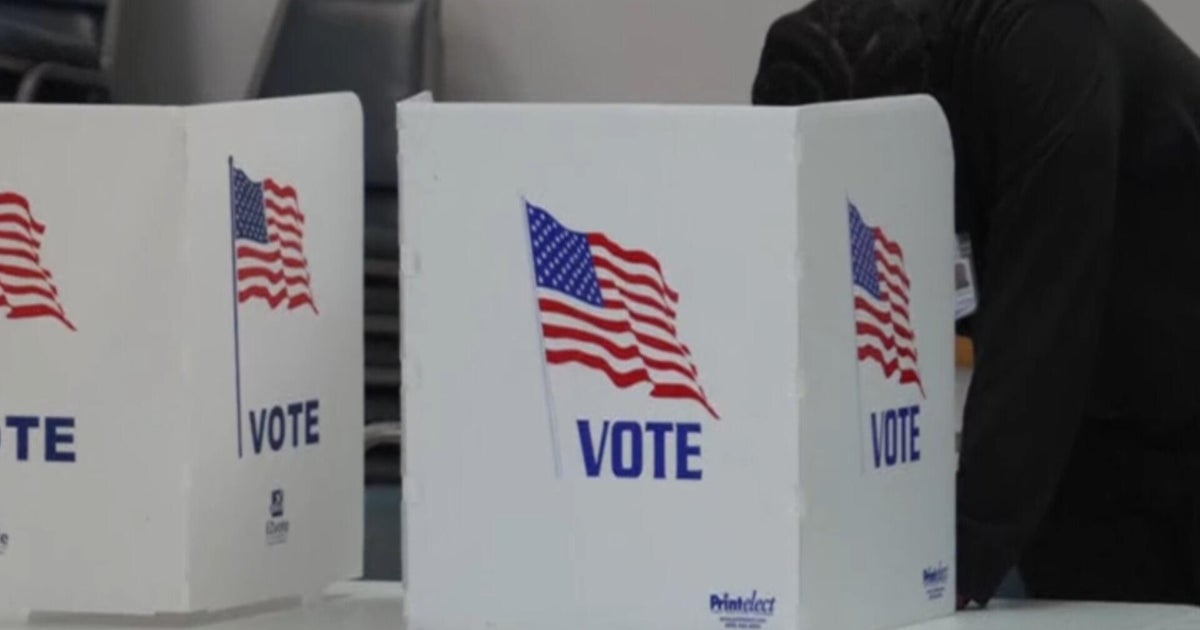
On a Friday in late September, Siddiqi welcomed Imran Ghani, the director of the local chapter of CAIR—the one that Tarek Hussein founded—to address the congregation about the need for Muslim citizens to vote in November. The visit was arranged by Salam Arif, a local anesthesiologist, who said that it has been difficult to inspire his fellow-Muslims. “The perception of most of the people is: ‘Red state, my vote doesn’t count,’ ” he told me.
Ghani, who is thirty-seven and was raised mostly in Houston, had been on the job for around two months when Abbott designated CAIR as a foreign terrorist organization. “What did I just sign up for?” Ghani recalled thinking. “But very quickly I realized that this is a path of all of the great civil-rights organizations in American history. Whenever a civil-rights organization is effective, it will be targeted by certain members of the political establishment.”
At the Kingwood event, as more than two hundred men and women filed into their separate prayer halls, Ghani drew on several verses in Al-Hujurat, the forty-ninth chapter of the Quran, widely interpreted as a directive for the ethical treatment of one another and a call for Muslim unity. He said that a lack of political power has made the community an easy target. He reminded his listeners of the right to religious freedom under the Constitution, and urged them to be “openly Muslim” at a time “when there is all sorts of hatred being spewed by the political élite and our children are being attacked in schools.” And he directed the attendees to the volunteer voting registrars seated at tables in the mosque.
Afterward, Mir Ali Sadat, an internal-medicine doctor, made his way to a table to confirm that he was registered. “We have to vote,” he told me as he filled out a form. “We have to make a society where everyone respects everyone, regardless of their religion, their language, their looks, their skin, their gender.”
Jida Nabulsi is the Texas director of Emgage, a nonprofit founded twenty years ago to propel civic engagement in the Islamic community. When we met, she was standing in the blinding sun in an elementary-school parking lot in the Houston suburb of Cypress, alongside nine young staffers as they prepared to knock on hundreds of doors. Nabulsi said that the group was trying to motivate people “who are unregistered or haven’t been involved at all.” In addition to canvassing, Emgage conducts sessions in mosques and other locations that focus on the rudiments of voting. Nabulsi told me that a right-wing, anti-Muslim group had recently put up a post calling her a “Sharia operative.” In her view, the term “Islamophobia” isn’t adequate for such attacks; she prefers the more plainspoken phrase “anti-Muslim hate.”
One of the door-knockers, Abdullah Younes, a seventeen-year-old university student, allowed me to tag along as he made his rounds. He drove his black pickup truck through the exit gate of an upscale subdivision and parked on a deserted street. The work, which he has been doing since July after being recruited by a relative, can feel thankless. Guided by a canvassing app that helps Emgage workers identify likely Muslim households, he was ten houses into his route and starting to sweat through his shirt before anyone opened the door. One woman waved him away. At homes where there was no answer, he left behind a flyer that read “The polls are calling. Will you answer?”
Abdullah Antepli, a Turkish-born imam and scholar who is the president of Houston’s nonsectarian Rothko Chapel, believes that the anti-Islam rhetoric will continue, not only because it attracts votes for Republicans but also because, in his view, the response from Muslims is too weak and disjointed. Many Muslims, Antepli told me, “realize the American dream individually, but that individual success doesn’t translate into a collective civic response.” One reason, he said, is “the lack of connecting tissues between various racial and ethnic Muslim communities,” which include, among other groups, recent arrivals from “socioeconomically, politically, and historically very disconnected and fragmented parts of the world.” This lack of cohesion is evident, too, in Houston’s mosques, where, he said, many who attend prayer services “come five minutes before” and leave two minutes after the services have ended.