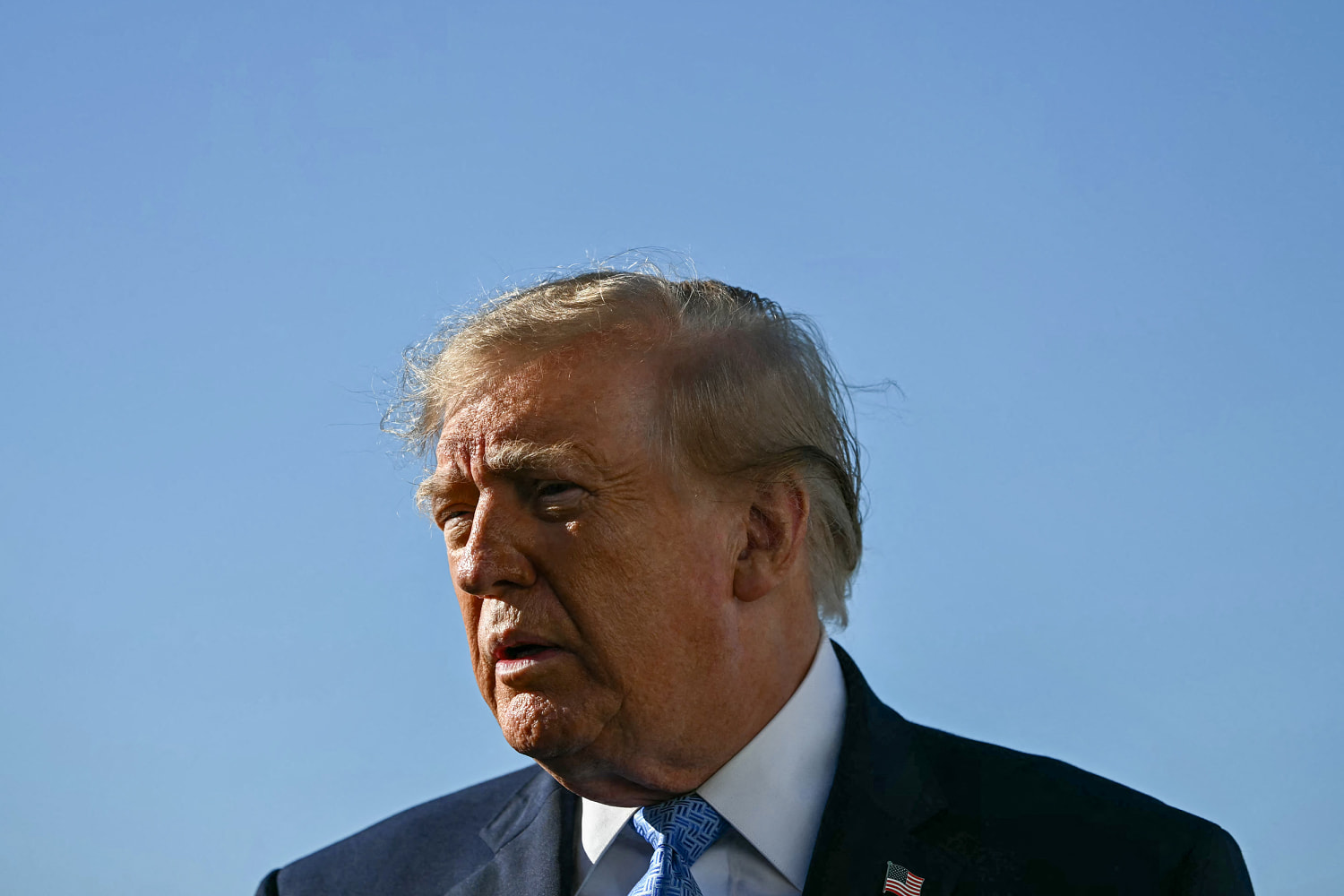
President Donald Trump said Monday that he is offering $1 million to anyone who reports voter fraud in the upcoming election or past ones.
Trump did not specify where the funds for such payments would come from. He said on Truth Social that they would be paid on the “arrest and conviction of those that created the fraud.” A White House spokesperson did not offer more details about the offer, referring NBC News to Trump’s post.
There is no evidence of widespread voter fraud in U.S. elections, though Trump has spent years claiming that there is and that it cost him the 2020 election he lost.
Instances of voter fraud do occur on occasion — such as when people fill out recently deceased relatives’ ballots or lie on mail ballot applications — and they are usually caught. A tracker from the conservative Heritage Foundation has collected more than 1,600 incidents of voter fraud over 40 years, a tiny fraction of the total votes cast over that period.
Trump’s offer Monday is his latest effort to exert greater influence over the midterm elections. His administration has dedicated significant resources to searching for noncitizens on states’ voter rolls. The Justice Department sued California officials in an attempt to force them to segregate mail ballots it says went to potential noncitizens. Noncitizen voting is also rare, studies show.
Last week, the Justice Department sued Alaska officials, at Trump’s request, to prevent the results of the U.S. Senate race from being certified if GOP Sen. Dan Sullivan loses.
Courts have also blocked Trump from making sweeping changes to mail voting and requiring documentary proof of citizenship to vote.
Trump’s voter fraud reward announcement comes after he unveiled a $25 million government fraud whistleblower program, telling reporters he’d decide who was worthy of the prize.
He has also been making other financial promises as he hits the campaign trail for Republicans ahead of the midterms, including $5,000 payments to Americans if his party maintains control of Congress. Trump has similarly not clarified where the money for those payments would come from.