In Iowa, Rob Sand, the state auditor and the Democratic candidate for governor, has taken a different, and more down-home, approach to populism. Sand begins his rallies by asking attendees to applaud, first, for the Republicans present, then for the independents, and then (“to be fair”) for the Democrats, and then prompts the crowd to sing the first verse of “America the Beautiful.” “I don’t really like political parties,” Sand said a few weeks ago, at a town hall in Dallas County, just west of Des Moines, noting that he first registered to vote as an independent “because I think for myself.” Sand often uses the phrase “absolute power corrupts absolutely,” in reference to one-party rule (Republicans have held Des Moines for a decade) and to draw attention to his work as an auditor, to find savings, but the basic case he makes on the trail is against the two-party system. “Can we pause for a moment to talk about how un-American that is?” Sand said. “Here we have a constitutional right to vote, and your tax dollars are paying for the election, but you’re not allowed to participate unless you sign a piece of paper saying you’re joining a private club beforehand.”
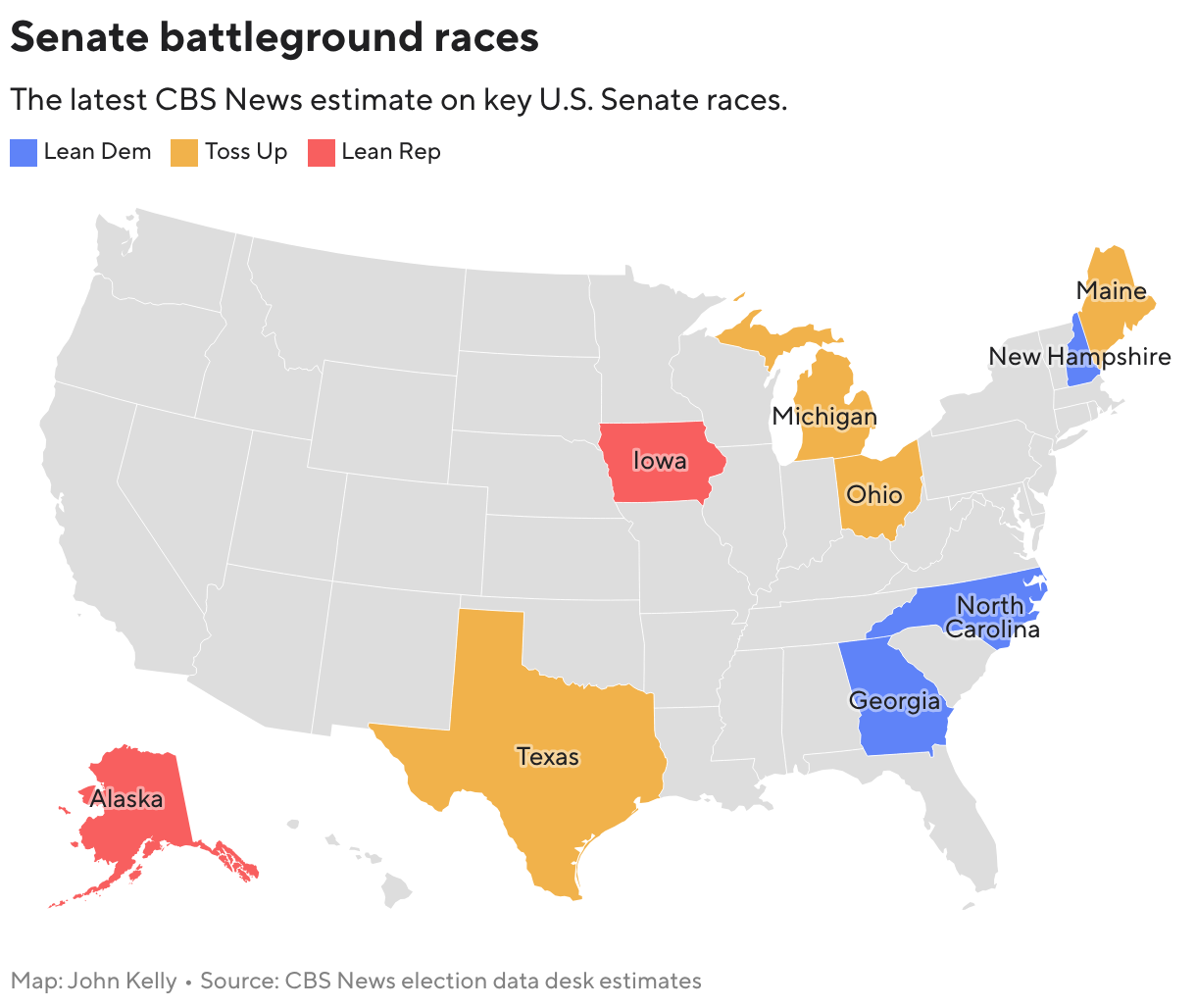
Democrats look competitive in places where they have been shut out for a generation: slightly ahead in Texas, where there has been no Democratic senator since 1994; about even in Kansas, where the Party’s drought stretches back to 1932; and getting close even in South Carolina. They have done so by running against the war and against the President’s indifference to the affordability crisis, but also, in an unusually straightforward way, against corruption. One recent estimate suggested Trump’s net worth grew by 2.2 billion dollars during the first year of his second term, and a recent Fox News poll found that eighty-eight per cent of voters were either “extremely” or “very” concerned about corruption. Though Trump had campaigned against a rigged system, as Ossoff put it at a recent campaign event, “he’s not unrigging it. He’s re-rigging it for himself.”
There are ironies in the campaign against Washington corruption, which sometimes echo Trump’s own themes. An ad for Annie Andrews, the Democratic pediatrician running for Senate in South Carolina, features her standing in a boggy marsh in waterproof overalls, saying, “Trump was right. The biggest swamp is Washington, D.C.,” and arguing that “Washington insiders, data-center developers, and the same drug and insurance companies that have been ripping us off for years” had “handpicked” her Republican opponent, Darline Graham. According to a CNN tally this week, two hundred and seventy-five million dollars has been spent on anti-corruption ads—most of it by Democrats, and much of it arguing that there is too much money in politics. Mary Peltola, a former Democratic congresswoman running for Senate in Alaska, and herself under public scrutiny for ballot shenanigans, has attacked the growth of her opponent’s net worth during his time in the Senate: “This is exactly the kind of corruption that Alaskans are sick of.”
Every out-of-power party criticizes the status quo, and the more out-of-power they are (and the national Democrats right now are quite out of power) the more latitude they have to do so. But the campaigns run by Democrats in 2026 have generally steered clear of sweeping policy proposals or eye-catching promises like impeaching the President; the House Democrats’ “First 100 Days” program largely focusses on repealing unpopular Trump initiatives and investigating corruption. This is, in its own way, a development. Part of the power of the Bernie Sanders movement, the great disruptive force inside the Democratic Party during the past decade, was how it coupled a more expansive, left-wing policy approach with populist appeals. Under Biden, mainstream Democrats experimented with more transformative policy goals without the political populism—leftist economics by wonks. Now mainstream Democrats like Ossoff and Sand, themselves hardly outsiders, are trying something like the inverse—anti-corruption and anti-insider messaging without the leftish approach to policy.
These midterms are likely the final elections of the long Trump era, which puts some of its patterns into relief. As has been the case in democracies around the world, American voters have generally disliked the governments in power, whether right-wing or left-wing, and no matter who is running the show the public dissatisfaction with most institutions and authorities has only deepened. In the United States, Trump found a way to exploit these patterns with a right-wing populism that edged into cultural nativism. Democratic voters, in choosing Joe Biden in 2020, leaned into a defense of American institutions.