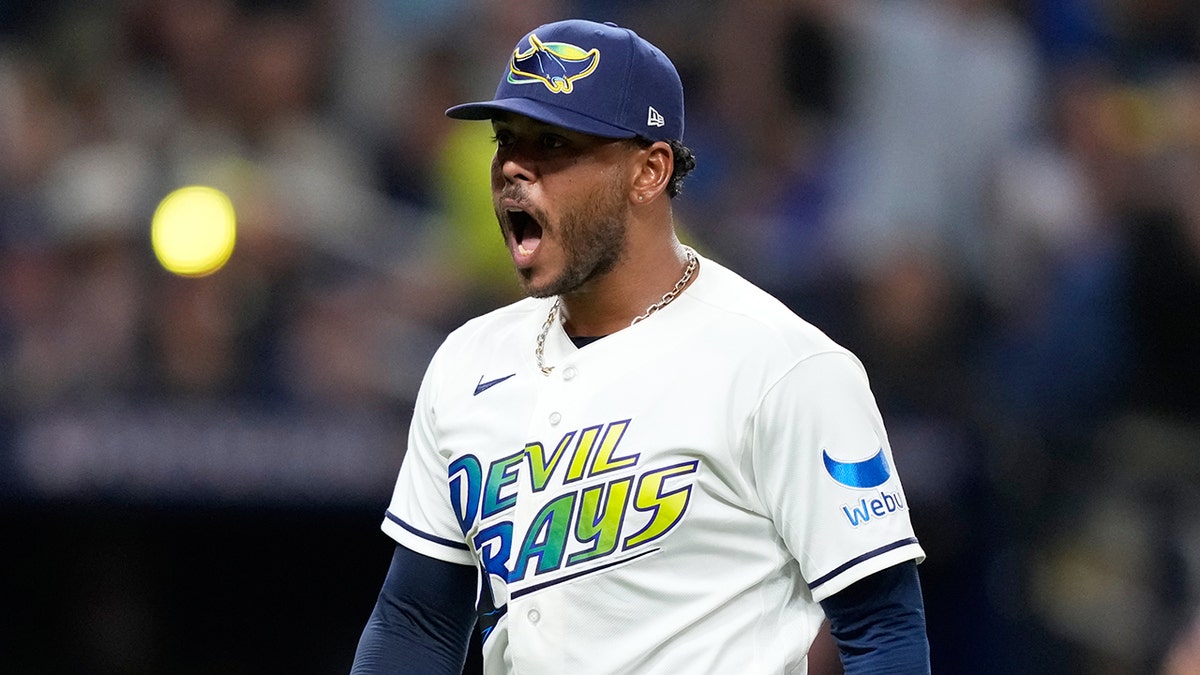
What do we want from a World Series? Or, maybe more existentially, what do we want from baseball? The sport has seemed to be in a perpetual state of crisis for as long as I’ve been alive: labor disputes, performance-enhancing-drug and sign-stealing scandals, widening payroll disparities, the complicated intrusion of sabermetrics, declining television ratings, games that take five hours to finish. Somewhere along the line, the national pastime, as it were, lost its grip on the American imagination. And what, or who, was to blame? The M.L.B. cracked down on steroid use, punished teams accused of cheating, and added measures to speed up the pace of play, instituting a pitch clock and limiting mound visits and pickoff attempts. Perhaps because of these interventions, baseball has enjoyed a recent surge of renewed enthusiasm. The past two World Series—between the Dodgers and the Yankees, in 2024, and, last year, between the Dodgers and the Toronto Blue Jays—saw a spike in ratings, and a more inspired cultural reception. I’m prone to thinking it’s the stars: tuning into a Dodgers game means watching Shohei Ohtani, the greatest ballplayer to ever live, play alongside future Hall of Famers Mookie Betts, Freddie Freeman, and Clayton Kershaw. The Yankees’ run to the World Series, in 2024, saw them trot out a revamped murderers’ row of Aaron Judge, Juan Soto, and Giancarlo Stanton. These were titans of the home run, outlandish talents whose bats looked like toothpicks in their hands. Maybe it was the cities they played for, too, the major metropolitan areas that made the pageantry feel that much more grandiose. You didn’t need to understand what OPS or WHIP meant when you watched last year’s Game Seven masterpiece between the Dodgers and the Blue Jays. You just needed to behold the go-ahead home runs and diving grabs from the stars whose names even your co-workers knew.
But this concentration of top-level talent in the league’s biggest markets has beget another apparent crisis for baseball. Unlike the other major American sports, the M.L.B. imposes no cap on team spending, making it so that monoliths like the Los Angeles clubs can shell out several times as much for their players than smaller budget teams like, say, the Brewers or the Rays. Ohtani, of the Dodgers, earns about three times as much annually as the entire Rays starting lineup; Juan Soto, of the Mets, makes roughly the same as the Brewers’ nine-man group. Mark Attanasio, the Brewers owner, is one of the many team governors who believes a salary cap “not only will help us compete, but more importantly all of the teams with lower payrolls, too,” as he argued at a recent press conference. With the league’s collective-bargaining agreement set to expire in December, owners like Attanasio will contend that a revised revenue-sharing system will promote parity and level the playing field, whereas the players, represented by their union, are willing to strike—even for an entire season—if their billionaire bosses continue to insist on a salary cap. “The opportunity for players to get paid is what this is all about,” Bryce Harper, of the Philadelphia Phillies, said in July. Cody Bellinger, of the Yankees, put it more pointedly: “If the billionaires are wanting it, they’re billionaires for a reason.” He went on, “They want to continue to enhance their portfolio as much as possible. Us players understand that.”
It can certainly be argued that the Dodgers are bastardizing baseball’s competitive balance, gleefully outbidding every team during free agency because, well, they can afford to. (This was once the domain of the Yankees, who, compared with the Dodgers, now seem thrifty.) Their big-money strategy has undoubtedly worked: they have won three of the past six World Series, and will likely be contenders for years to come. But spending money is not a surefire path to success. The Los Angeles Angels have repeatedly lapsed into losing seasons despite doling out huge contracts to big-name free agents, and the San Francisco Giants have suffered several consecutive below-five-hundred seasons after investing in a slurry of high-priced talent. (I’ll spare you, Mets fans—finishing last in the N.L. East, with the highest payroll in baseball, surely hurts enough.) Baseball rosters are large and unwieldy; the margins between success and failure are slim and hard to control for. There is no equivalent to a LeBron James shaping every possession of an N.B.A. Finals game, or a Tom Brady dictating his team’s every offensive drive. Baseball is an ensemble game, a wildly erratic sport to predict. As Roger Angell wrote, for The New Yorker, in 2011, the sport “always remains a fraction beyond our reach.” An extra left-hander in the bullpen might determine whether a team advances in the playoffs; a scrawny kid taken in the twenty-fifth round of the M.L.B. draft, earning the league-minimum salary, might make a game-saving play in the World Series. After the Brewers swept the Dodgers in the National League Championship Series, the Milwaukee manager Pat Murphy said, in a postgame interview, that the Dodgers “may have a bunch of Hall of Famers, but we have a bunch of gamers.” Because that’s how baseball goes, doesn’t it? Slumps and funks come for everyone, and a five-foot-nine right fielder for the Brewers named Sal Frelick might launch a home run in Game Two of the World Series to cap off a thrilling late-game comeback. Sometimes a sacrifice bunt and a sturdy bullpen can make up for hundreds of millions of dollars in salary disparity. Sometimes the money only takes you so far.